Your child’s first
step into the world
of soccer!
Where training is fun, safe, and built for long-term development
European methodology adapted for American kids
Small groups • 50-minute sessions • Individual approach
About our philosophy and methodology
At First Step Kids Soccer Club, we believe that a child’s first experience with soccer should be joyful, safe, and inspiring. Our training program for children aged 3–6 is built around four core principles.
Program Objective
Our primary goal is to create a strong foundation for each child’s future in soccer. We teach essential technical skills, develop physical abilities, and foster a love for the game in a supportive and positive environment.
Training Structure
Each session follows a consistent, child-centered format and includes four key components:
Technical Block
Children learn to dribble, pass, shoot, stop, and control the ball using both feet.
Objective: build confidence and coordination with the ball
Game-Based Storyline
A fun, imaginative exercise involving movement and the ball (missions, characters, journeys).
Objective: promote engagement, creativity, and enjoyment of training.
Situational Drills
Simple game situations such as 1v1, 2v1, or target shots.
Objective: develop basic decision-making and understanding of football scenarios
Mini-Match (Small-Sided Game)
Children play simplified games (2v2, 3v3, or 4v4 depending on age).
Objective: apply learned skills in a real game environment.
Key
Development
Areas
Our methodology focuses on growth across four main areas:
Technical Skills – ball control, dribbling, passing, shooting, stopping, and using both feet.
Physical Abilities – coordination, agility, speed, reaction, flexibility, balance, and overall motor skills.
Cognitive & Soccer IQ – understanding space, positioning, quick reactions, and basic decision-making.
Emotional & Social Skills – teamwork, confidence, respect, emotional regulation, and enjoying the team experience.
Expected Outcomes
By the end of the program, each child will:
Confidently perform basic soccer techniques — dribbling, passing, shooting, ball control, and directional changes.
Apply these skills during gameplay and small-sided matches.
Improve physical qualities such as agility, coordination, balance, flexibility, and speed.
Build a strong foundation to transition into more advanced soccer programs or academies.
Gain self-confidence and learn to communicate and work within a team.
Receive valuable life experience through sport — managing emotions, interacting with others, and understanding the spirit of teamwork.
Schedule
Our training sessions take place twice a week — on Tuesdays and Thursdays. We divide children into age-appropriate groups to provide the best learning environment.
The schedule below applies to our Glendale location.
DAY
AGE GROUP
TIME
Tuesday / Thursday
(younger group)
PM
Tuesday / Thursday
(older group)
PM
Our pricing is flexible and depends on several factors, such as the number of weekly sessions, age of the child, skill level, program duration, and whether the training is group-based or individual.
Our main goal is to make soccer accessible for every child.
We believe that every kid should have the opportunity to play and develop through soccer, regardless of their situation.
Individual approach.
We review each case personally to find the best possible solution. If you have any specific requests or circumstances, we’re always ready to discuss them and offer an option that allows your child to train without limitations.
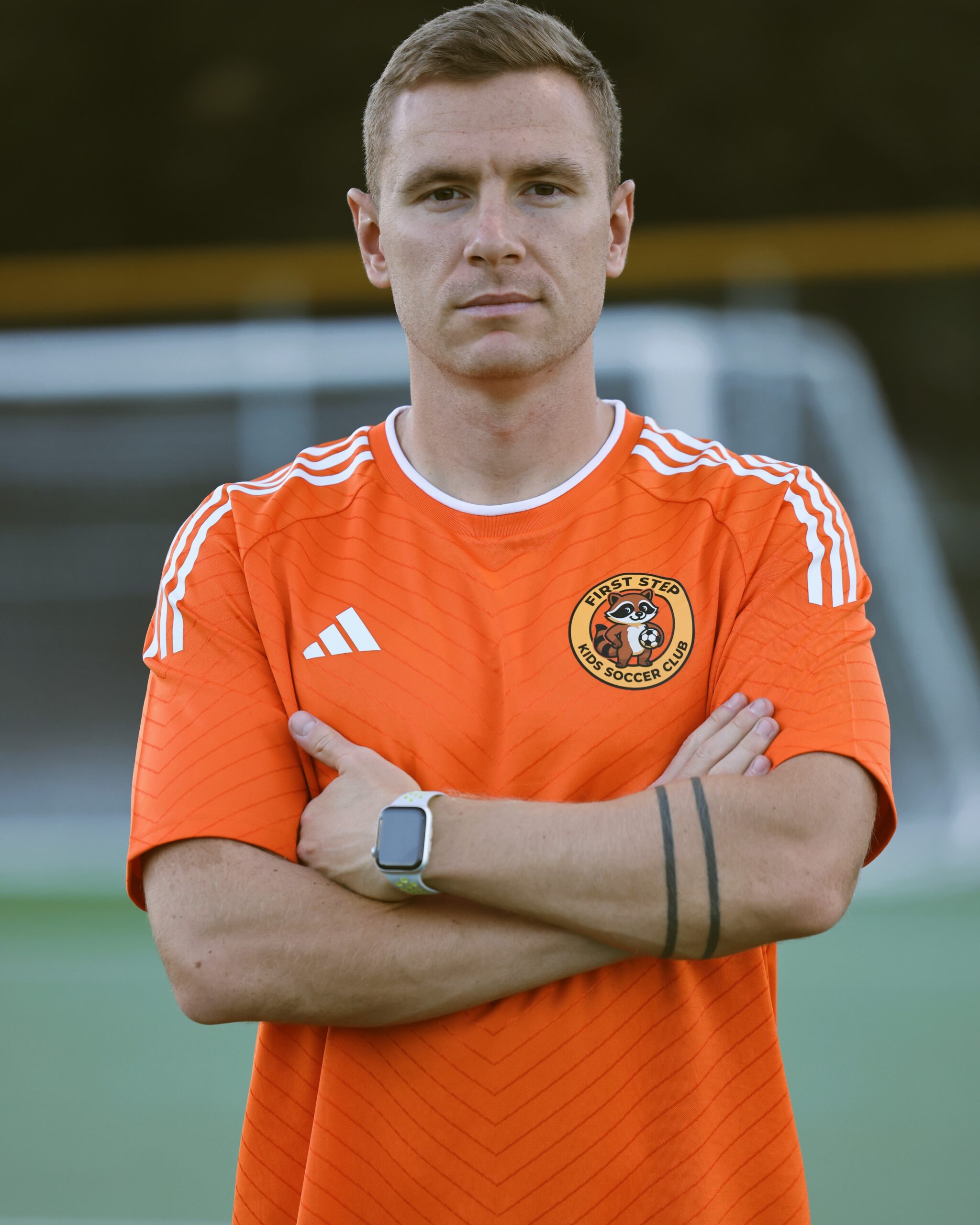
about me
I am a professional soccer coach with over 10 years of experience working with children and youth players. My main specialization is early childhood development through soccer, starting from ages 3 to 6.
Throughout my career, I have worked with soccer academies, developed educational programs for young players and coaches, organized tournaments and coaching seminars, and implemented my training methodology internationally. My early-age soccer development program has received professional recognition and is based on child psychology, age-appropriate physiology, and modern European coaching principles.